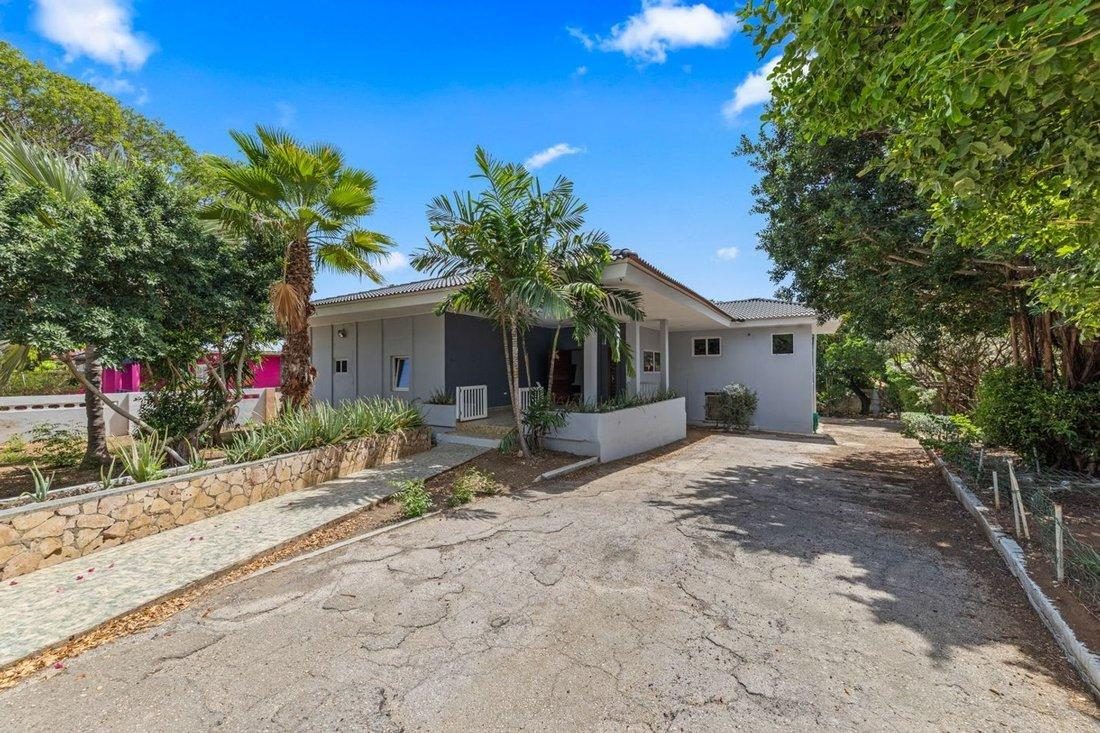
You can buy a home in Curaçao as a foreigner with the same ownership rights as a local — full freehold title, registered at the notary, no special permits. That's the easy part. The hard part is paying the right price for the right house in the right area, and that's where most foreign buyers get quietly fleeced. This guide covers what homes actually cost right now, the mistakes that cost buyers tens of thousands, and how the process really works.
What homes actually cost in Curaçao right now
Ignore the fantasy listings. Here is what real money buys in 2026, in USD:
| Home type | Realistic range (USD) | What you get |
|---|---|---|
| Fixer-upper | $120,000 – $220,000 | Older local-style home in areas like Santa Rosa, Montaña, or the outer edges of Willemstad. Expect to spend another $50,000–$100,000 on renovation, and expect the renovation to take twice as long as quoted. |
| Move-in-ready 3-bedroom, expat area | $350,000 – $550,000 | A solid, modern home in Jan Thiel, Blue Bay, Vista Royal, or near Spanish Water. Pool, garden, decent finish. This is the sweet spot of the market and where inventory moves fastest. |
| Luxury home with ocean views | $750,000 – $2,500,000+ | Coral Estate, prime Jan Thiel, waterfront Spanish Water. True oceanfront starts around $1M and climbs quickly. |
Prices have been rising steadily as Dutch, American, and Canadian buyers compete for a limited pool of quality homes in the handful of neighborhoods foreigners actually want. The bottom of the market is cheap for a reason — location, condition, or title complexity.
The 3 most expensive mistakes foreign buyers make
1. Buying on leasehold land without understanding it. A meaningful share of Curaçao property sits on erfpacht (long lease) or huurgrond (rented government land) rather than eigendom (freehold). The listing often doesn't make this obvious. Leasehold isn't automatically bad, but it affects value, financing, and what happens when the lease term runs down. Always have the notary confirm the exact land tenure before you sign anything — not after.
2. Skipping a technical inspection because "it looks fine." Salt air, termites, aging septic systems, and improvised electrical work hide behind fresh paint. A professional building inspection costs a few hundred dollars and routinely uncovers five figures of problems. Sellers here rarely disclose voluntarily; the legal standard is closer to buyer-beware than what Americans are used to.
3. Trusting the asking price as a market signal. There is no MLS with reliable sold data. Asking prices on the portals can sit 15–30% above what properties actually close for, and some listings are stale by years. Foreign buyers who negotiate like the asking price is real overpay routinely. You need someone who knows recent actual transactions in that specific neighborhood.
Where the value is right now
Jan Thiel is the established expat favorite — walkable to beach clubs and restaurants, strong rental demand, and the most liquid resale market on the island. You pay for that liquidity. Blue Bay offers gated golf-and-beach living with strong short-term rental performance; villas here are often better value per square meter than Jan Thiel. Coral Estate on the quieter west side gives you dramatic ocean-cliff settings at prices below what equivalent coastline costs on other islands. Westpunt and the western villages are the frontier: the cheapest ocean-adjacent homes and land, but you trade away proximity — it's 35–45 minutes to Willemstad. For value hunters willing to renovate, the neighborhoods ringing Willemstad — Van Engelen, Damacor, Mahaai — offer solid mid-century homes near international schools at local prices.
The buying process, step by step
- Verbal offer through the agent, usually followed by a short written purchase agreement (koopovereenkomst). A 10% deposit into the notary's escrow account is standard once signed.
- The civil-law notary (notaris) is the centerpiece of the transaction — a neutral, government-appointed official who verifies title, checks for liens, handles escrow, and executes the deed. You don't need a separate title company, but the notary works for the transaction, not for you. Your own advisor still matters.
- Due diligence window: land tenure check, building inspection, verification of permits for any additions, and utility account status. Unique to the island: confirm the property's boundaries against the kadaster (land registry) survey — informal fence lines and legal boundaries diverge more often than you'd think.
- Closing at the notary, typically 6–10 weeks after the agreement. You pay the purchase price, 4% transfer tax, and notary fees (roughly 1–2%). Budget about 6% all-in on top of the price. The deed is registered and the property is yours — freehold, in your name or your company's.
Can a home generate rental income?
Yes, and this is why the mid-market moves fast. A well-located 3-bedroom with a pool in Jan Thiel or Blue Bay can gross $30,000–$55,000 per year on short-term rental at realistic occupancy (55–70%). That's a gross yield of 7–10% on a $450,000 home — before management (typically 15–25%), utilities, pool care, and maintenance. Net, expect 4–6% if professionally managed. Long-term rental to expats and professionals runs $1,500–$2,800/month for the same home — lower yield, far less hassle. Homes outside the tourist zones rent long-term only, at local rates.
Curaçao vs. Mexico vs. Portugal at $400,000
In Mexico (Riviera Maya), $400,000 buys a newer condo or small villa with strong rental income, but coastal ownership runs through a bank trust (fideicomiso), and oversupply in some zones is pressuring rents. In Portugal, $400,000 buys a good apartment outside Lisbon's center — a mature, liquid, appreciating market, but yields are thin (3–5%) and the golden visa no longer covers property. In Curaçao, the same money buys a detached 3-bedroom home with a pool in a top expat neighborhood, owned freehold under a Dutch-based legal system, with USD-pegged currency and 7–10% gross short-term rental yields. Curaçao's trade-off: a smaller resale market and slower long-term appreciation than Portugal. If you want a home you'll actually use that also pays for itself, Curaçao wins this comparison. If you want pure appreciation, Portugal still edges it.
The honest bottom line
The Curaçao home market rewards buyers who verify land tenure, inspect before offering, and negotiate from real transaction data instead of asking prices. It punishes everyone else.
I help serious buyers find homes that aren't on the big portals yet. Tell me what you're looking for and I'll send you a hand-picked shortlist.
Get a hand-picked shortlist (free)
Tell me what you're looking for. I'll reply personally with a short, honest list of options that fit — including properties that aren't on the big portals — plus the free 2026 Buyer's Blacklist: 12 property traps foreign buyers keep falling into.