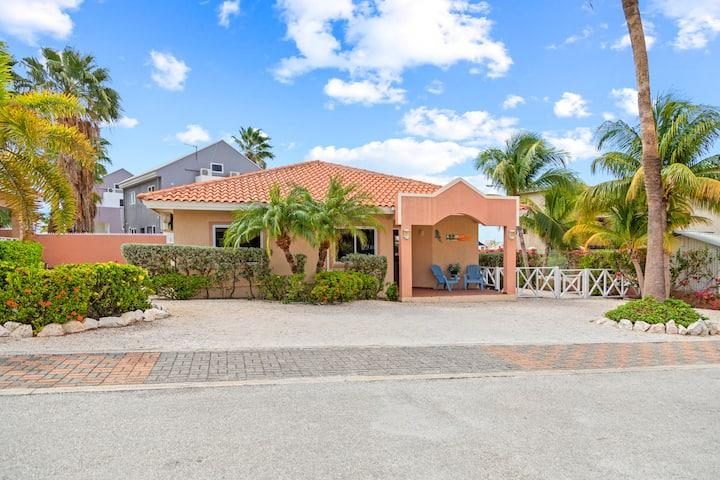
If you searched "houses for sale Curaçao," you're probably comparing this island against Aruba, Bonaire, Mexico, maybe Spain — and you're right to be careful with your money. I've walked through dozens of houses here, from concrete shells to overpriced show homes. This is what I'd tell a friend before they booked a viewing trip.
House vs. villa vs. apartment — the words matter here
Local listings use these terms loosely, and the difference is money. A "house" (huis/kas) is typically a standalone concrete-block home on its own plot, often older, often outside the resort zones. A "villa" usually signals a newer build in a planned development or resort area — Jan Thiel, Blue Bay, Vista Royal — with a pool and a 30–50% price premium for the label and the location. An "apartment" covers everything from a converted garage unit to a modern condo. Why it matters: villas in managed developments carry HOA-style fees and rental rules; standalone houses give you freedom but make every repair, fence, and security decision yours alone. Maintenance on a freestanding house in the tropics is a genuine second job or a genuine budget line — pick one.
What houses cost right now
| Tier | Range (USD) | Real-world example |
|---|---|---|
| Entry-level | $140,000 – $250,000 | A 2–3 bedroom local-style house in Santa Rosa, Montaña, Steenrijk, or Tera Kora. Solid bones, dated kitchen, no pool. Fine for long-term rental or a renovation project. |
| Mid-range | $280,000 – $450,000 | A renovated 3-bedroom with pool in Vista Royal, Damacor, Van Engelen, or the edges of Jan Thiel. This is where most foreign buyers should be looking. |
| Premium | $500,000 – $900,000+ | Newer villa-grade houses inside Jan Thiel, Blue Bay, or with water views near Spanish Water. |
The maintenance reality nobody budgets for
Tropical ownership costs are the hidden second mortgage. Salt air corrodes everything metal — hinges, appliances, AC condensers, window frames. ACs near the coast live 5–8 years, not 15. Hurricane season: Curaçao sits south of the main hurricane belt (a real advantage over the northern Caribbean), but tropical storms still pass close enough that shutters and roof condition matter — and insurers price accordingly. Pools run $150–$250/month to maintain properly. A realistic annual budget for a mid-range house: 1.5–2.5% of the property value in maintenance, plus utilities that will shock you — electricity at ~$0.30+/kWh means $250–$500/month with regular AC use. Solar panels are one of the best investments on the island for exactly this reason.
Best areas for schools, restaurants, and expat life
For families, the triangle that matters is drawn around the international schools east of Willemstad. Jan Thiel and Vista Royal put you near the beach clubs, supermarkets, and the largest expat community. Damacor, Mahaai, and Van Engelen are the quiet, leafy, slightly older neighborhoods locals with money and long-term expats favor — closer to international schools and 10 minutes from everything, at prices below the resort zones. Blue Bay works if you want gated and don't mind the 15-minute drive to town. Buying west of Willemstad saves money but adds commute to essentially everything an expat family does.
The "bargain" house warning
Every cheap listing has a reason. The ones that hurt: title complexity — inherited properties with multiple heirs who haven't all agreed to sell (boedel situations) can take years to clear; rented government land (huurgrond) instead of freehold, which many lenders won't finance; unpermitted additions that become your problem at resale; septic and cesspit issues — much of the island isn't on sewer; and concrete cancer — rebar corrosion inside walls, visible as rust stains and spalling. Before offering on any bargain: notary title check, kadaster boundary check, building inspection, and ask the neighbors what they know. They'll tell you.
What holds resale value here
Features that hold value: location in the eastern expat corridor, legal freehold title, a pool, good outdoor living space, hurricane-rated roofing, solar, and rental-permit-friendly zoning. Features that don't: oversized luxury finishes in modest neighborhoods (you can't sell a $600k interior in a $250k street), carpets and enclosed dark layouts (buyers want airflow and light), and elaborate gardens that need daily water. The resale buyer for your house will almost certainly be another foreigner or a returning Dutch-Curaçaoan — buy what that person will want in seven years.
How Curaçao compares for the value-conscious buyer
Against Aruba: Curaçao houses cost 25–40% less like-for-like, with a less saturated rental market but also less tourism demand. Against Bonaire: comparable prices, but Curaçao offers far more infrastructure, healthcare, and flights. Against Mexico or the Dominican Republic: Curaçao costs more but you get Dutch-model law, freehold title, a USD-pegged currency, and dramatically lower title risk. You're paying for legal certainty. For a value-conscious buyer, that's usually the right thing to pay for.
I've walked through dozens of houses on this island. Let me tell you which ones are worth your time.
Get a hand-picked shortlist (free)
Tell me what you're looking for. I'll reply personally with a short, honest list of options that fit — including properties that aren't on the big portals — plus the free 2026 Buyer's Blacklist: 12 property traps foreign buyers keep falling into.